ISO 22301: Business Continuity Management for IT Companies
How ISO 22301 helps IT and SaaS providers keep critical services running, from business impact analysis to tested recovery plans and certification.
ISO 22301 at a glance
- Full name
- ISO 22301:2019 Security and resilience: Business continuity management systems (BCMS) requirements
- Type
- Certifiable standard · Voluntary
- Mandatory?
- Voluntary. Often requested by banks, healthcare and government clients of IT and BPO providers, and supports regulatory resilience rules such as DORA and RBI outsourcing directions.
- Issued by
- ISO (technical committee ISO/TC 292 Security and resilience)
- Current version
- ISO 22301:2019 with Amendment 1:2024 (climate action changes)
- Applies in
- Worldwide (international standard)
- Certification or audit
- Yes. Accredited certification body; three-year certificate with annual surveillance audits.
- Typical timeline
- 4 to 9 months
- If you don't comply
- No fines. Clients may terminate or penalise under SLAs after an unmanaged outage.
- Who needs it
- IT and managed service providers, data centres, SaaS platforms, BPOs, banks and any organisation whose clients depend on uninterrupted services.
Key dates
- First edition replaces BS 25999
- Second edition
- Amendment 1 adds climate change considerations
For IT service providers, an outage is not just an internal problem: it breaks client SLAs, stops client operations and can end contracts. ISO 22301 is the international standard for business continuity management systems (BCMS), and it gives a structured, certifiable way to prepare for disruption, from cloud region failures and ransomware to power cuts, floods and pandemics. This guide explains what ISO 22301 requires, how business impact analysis and recovery objectives work, and how to get certified efficiently alongside ISO 27001.
Quick answer: ISO 22301 is an international standard for business continuity management systems that organisations can be certified against. It is voluntary, though clients in banking, healthcare and government often require it or equivalent evidence. The current version is ISO 22301:2019 with Amendment 1:2024, which added climate change considerations. Core requirements include a business impact analysis, risk assessment, continuity strategies, documented plans, regular exercises and continual improvement. Certification typically takes 4 to 9 months.
What is ISO 22301?
ISO 22301 specifies requirements to plan, establish, implement, operate, monitor, review, maintain and continually improve a management system that protects against, reduces the likelihood of, prepares for, responds to and recovers from disruptive incidents.
Full form and definition
The full title is ISO 22301, Security and resilience: Business continuity management systems, Requirements. Key terms:
- Business impact analysis (BIA): analysing the impact of disruption over time to determine priorities and requirements.
- Maximum tolerable period of disruption (MTPD): the time after which impacts of not resuming an activity become unacceptable.
- Recovery time objective (RTO): the target time to resume an activity or system, set within the MTPD.
- Recovery point objective (RPO): the maximum acceptable data loss, expressed as a point in time.
- Minimum business continuity objective (MBCO): the minimum level of service acceptable during a disruption.
Law, standard or certification?
It is a voluntary standard with accredited certification. Sector regulators, such as banking and financial regulators, often require business continuity arrangements that ISO 22301 helps evidence.
History and background of ISO 22301
The first edition was published in 2012, replacing the British standard BS 25999-2. The 2019 second edition simplified the text, clarified requirements and aligned with ISO's common management system structure. Amendment 1:2024 added requirements to consider whether climate change is a relevant issue and a relevant requirement of interested parties, a change made across ISO management system standards.
Supporting standards include ISO 22313 (guidance on using ISO 22301), ISO/TS 22317 (business impact analysis) and ISO 22316 (organisational resilience).
Why was ISO 22301 introduced?
Organisations depend on complex supply chains and technology, and disruptions such as terrorist attacks, natural disasters and IT failures showed that ad hoc disaster recovery plans were not enough. An international standard gave a common, auditable approach.
Main objectives and purpose
- Protect prioritised activities and the resources they depend on.
- Set recovery objectives based on business impact, not guesswork.
- Prepare documented, tested responses to disruption.
- Give clients and regulators confidence through certification.
- Build organisational resilience through continual improvement.
Who needs ISO 22301?
- Managed service providers, data centres and cloud providers whose outages directly affect clients
- IT outsourcing and BPO companies serving banks, insurers and healthcare
- SaaS companies with critical customer workloads
- Payment and fintech companies
- Government and public sector suppliers
ISO 22301 is used worldwide. Indian IT and BPO companies often certify to meet requirements in contracts with global banks, and EU financial entities under DORA expect strong continuity from ICT providers.
Key requirements of ISO 22301
Management system clauses
- Context (clause 4): internal and external issues (including climate change), interested parties, legal and regulatory requirements, scope.
- Leadership (clause 5): commitment, business continuity policy, roles and responsibilities.
- Planning (clause 6): actions for risks and opportunities, business continuity objectives, planning changes.
- Support (clause 7): resources, competence, awareness, communication, documented information.
- Operation (clause 8): the core continuity work, described below.
- Performance evaluation (clause 9): monitoring, internal audit, management review.
- Improvement (clause 10): nonconformity, corrective action and continual improvement.
Clause 8: operation
- Operational planning and control.
- Business impact analysis and risk assessment: identify activities that support products and services, assess impacts over time, set prioritised timeframes (RTOs), identify dependencies and resources, and assess risks of disruption.
- Business continuity strategies and solutions: select options for people, information and data, buildings and facilities, technology, suppliers and partners.
- Business continuity plans and procedures: response structure, warning and communication, plans for responding and recovering, and procedures to return to normal.
- Exercise programme: regular exercises based on realistic scenarios, with post-exercise reports.
- Evaluation of business continuity documentation and capabilities, including after incidents and changes.
How to implement ISO 22301: step by step
- Define scope: services, sites and teams, usually starting with client-facing services.
- Get leadership commitment and appoint a business continuity manager.
- Run a business impact analysis with service owners: impacts over time, MTPD, RTO, RPO and dependencies, including cloud providers and critical suppliers.
- Assess risks of disruption, such as ransomware, cloud region failure, loss of a key site, key person dependency and supplier failure.
- Select strategies: multi-region architecture, backups and immutable copies, alternative work locations and remote work, supplier alternatives.
- Write plans: an incident management plan, business continuity plans per service or site, and IT disaster recovery plans.
- Exercise: tabletop exercises, technical failover tests and backup restore tests.
- Train staff on their roles.
- Run internal audit and management review.
- Certify through Stage 1 and Stage 2 audits.
Documentation required
- BCMS scope and business continuity policy
- Business continuity objectives
- Legal, regulatory and contractual requirements
- BIA and risk assessment methodology and results
- Business continuity strategies and solutions
- Business continuity plans and procedures, including communication procedures
- Exercise programme and reports
- Competence and training records
- Internal audit reports, management review records, nonconformities and corrective actions
Audit and certification requirements
Certification by an accredited certification body follows a three-year cycle: Stage 1 and Stage 2 audits, annual surveillance audits and recertification. Auditors look closely at whether recovery objectives are based on BIA results, whether strategies can actually meet them, and whether exercises are real and lead to improvements. Combined audits with ISO 27001 or ISO 9001 are common.
Estimated implementation timeline
| Phase | Duration |
|---|---|
| Scope, BIA and risk assessment | 4 to 8 weeks |
| Strategies and plans | 4 to 8 weeks |
| Exercises and training | 4 to 8 weeks |
| Internal audit, management review and certification | 4 to 8 weeks |
Total: typically 4 to 9 months.
Cost considerations
- Certification body fees
- Consultancy for BIA and plan development, if used
- Resilience investments: multi-region infrastructure, backup and disaster recovery services, alternative sites
- Business continuity software for plans and notifications
- Staff time for exercises
Benefits of ISO 22301
- Recovery objectives that match client SLAs and business needs.
- Faster, calmer response to incidents, including ransomware.
- Certification that satisfies client and regulator due diligence.
- Reduced financial and reputational impact of disruptions.
Risks of not having ISO 22301
No fines apply for not certifying. Without a tested continuity capability, IT providers risk SLA penalties, contract termination and reputational damage after outages, and may fail regulator-driven supplier assessments.
Common implementation mistakes
- Setting RTOs without a BIA, or promising RTOs the architecture cannot meet.
- Plans that live in a shared drive that will be unavailable during an outage.
- Exercises that are scripted walk-throughs with no real testing.
- Ignoring supplier and cloud provider dependencies.
- Focusing only on IT disaster recovery and forgetting people, facilities and communications.
Challenges for IT companies
- Shared responsibility with cloud providers for availability.
- Many clients with different RTO and RPO expectations.
- Ransomware scenarios that compromise backups as well as primary systems.
- Remote and distributed teams that change what "site recovery" means.
Best practices and recommendations
- Base every RTO and RPO on the BIA and verify it through technical tests.
- Keep immutable, isolated backups and test restores regularly.
- Store plans where they remain accessible offline and during identity provider outages.
- Integrate with ISO 27001 incident and continuity controls and ITIL service continuity management.
- Exercise at least annually per critical service, and after major changes.
Tools and technologies that help
- Business continuity management software for BIA, plans and exercises
- Mass notification tools
- Backup and disaster recovery platforms with immutable storage
- Multi-region and multi-zone cloud architecture
- Monitoring and status page tools for client communication
Relationship with other compliance frameworks
| Framework | Relationship |
|---|---|
| ISO 27001 | Includes controls for ICT readiness for business continuity and information security during disruption |
| ISO 9001 | Same management system structure; integrated audits are common |
| ITIL | Service continuity management practice supports the BCMS |
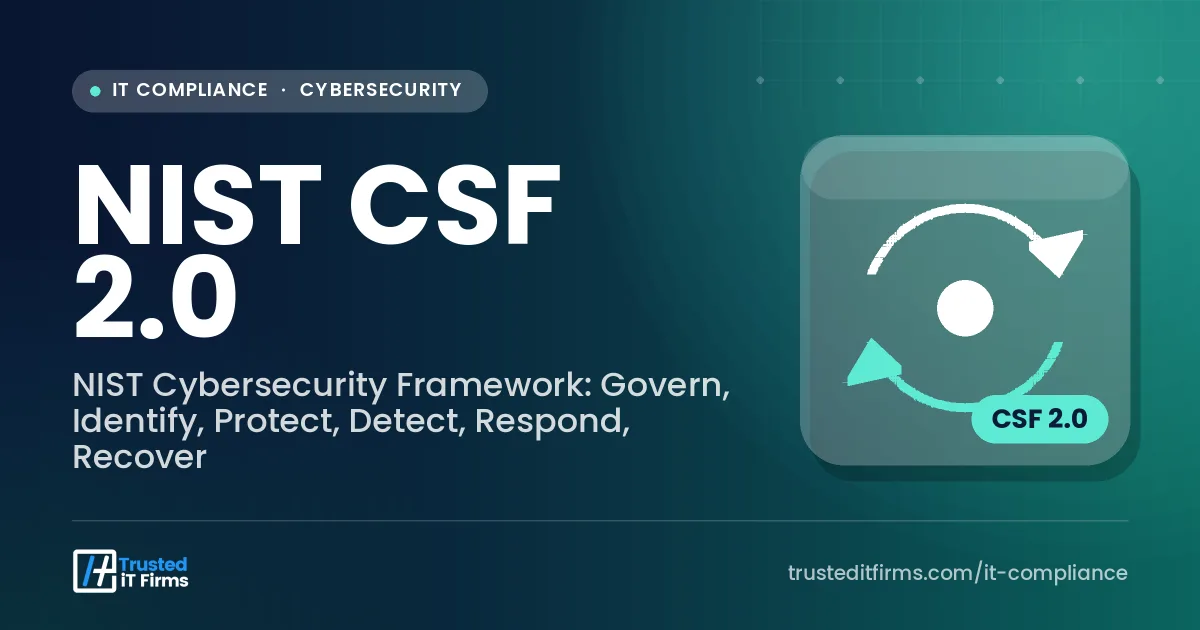
| NIST CSF | Recover function outcomes align with continuity planning |
Real-world implementation examples
The following are illustrative composites based on common patterns, not named clients.
Managed service provider
An MSP's BIA showed its remote monitoring platform had a two-hour MTPD for clients, but its architecture could only recover in eight hours. It moved to an active-passive multi-region design, tested failover quarterly and certified to ISO 22301 alongside ISO 27001.
BPO company
A BPO serving a European bank set up split-site operations across two cities with remote work fallback, ran an annual exercise simulating loss of its main site, and used the certificate in the bank's supplier review.
Frequently asked questions
What is the latest version of ISO 22301?
ISO 22301:2019 with Amendment 1:2024, which added climate change considerations.
Is ISO 22301 mandatory?
No, but clients and regulators may require it or equivalent business continuity evidence.
What is the difference between business continuity and disaster recovery?
Disaster recovery focuses on restoring IT systems and data; business continuity covers the whole organisation, including people, facilities, suppliers and communications.
What is a business impact analysis?
An analysis of how disruption affects activities over time, used to set priorities, recovery time objectives and resource requirements.
What are RTO and RPO?
RTO is the target time to resume an activity or system after disruption. RPO is the maximum acceptable amount of data loss measured in time.
How often should business continuity plans be tested?
ISO 22301 requires exercises at planned intervals and when significant changes occur. Most organisations exercise critical services at least annually.
Can ISO 22301 be combined with ISO 27001?
Yes. They share a structure and many organisations run integrated management systems and audits.
How long does ISO 22301 certification take?
Typically 4 to 9 months.
How long is the certificate valid?
Three years, with annual surveillance audits.
Conclusion and next steps
ISO 22301 turns business continuity from a document into a tested capability. For IT providers, it aligns architecture, operations and client promises.
- Define scope around client-facing services.
- Complete a BIA and risk assessment.
- Choose strategies that meet the recovery objectives.
- Write plans and test them for real.
- Certify, ideally with ISO 27001.
How we keep this guide up to date
We review this guide every six months and whenever ISO publishes amendments or a new edition of ISO 22301 or its supporting standards.
Official sources for this guide
About this guide
- Written by
- Trusted IT Firms Editorial Team
- First published
- Last reviewed
- Next scheduled review
- Version covered
- ISO 22301:2019 with Amendment 1:2024 (climate action changes)
Written from the official sources listed above. We re-check this guide on the review date and as soon as the issuing body announces a change. This is general information for IT companies, not legal advice. How we research these guides.